PF3000 v2’s New Frame: Making Art for Napa Lighted Arts Part 1
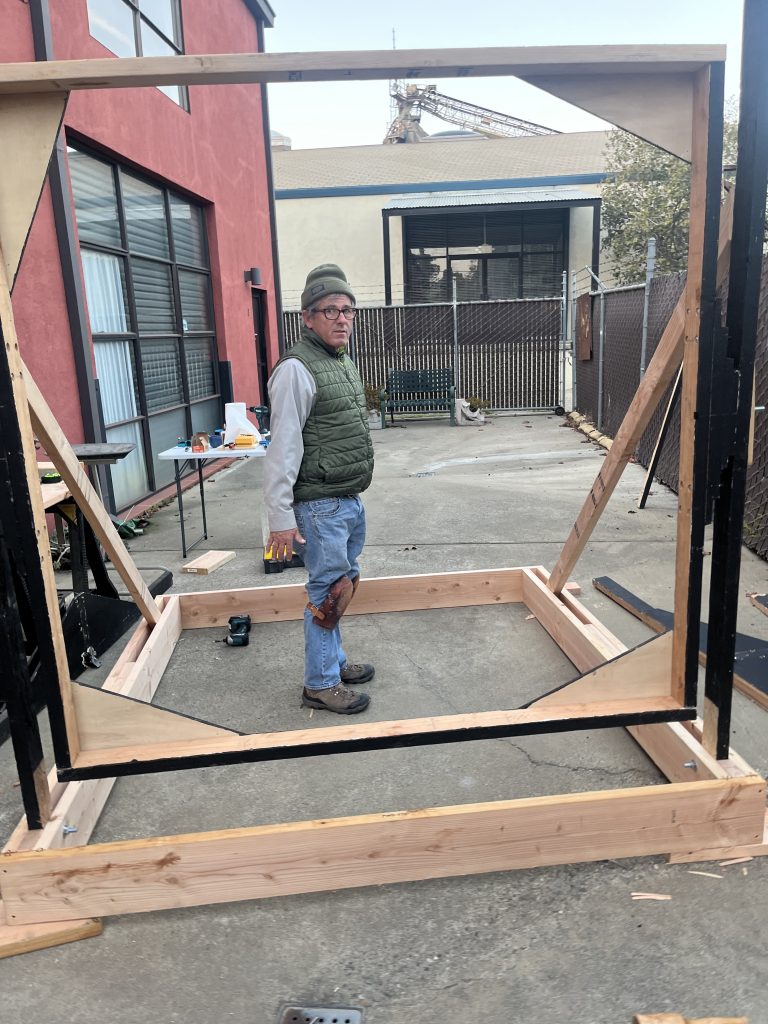
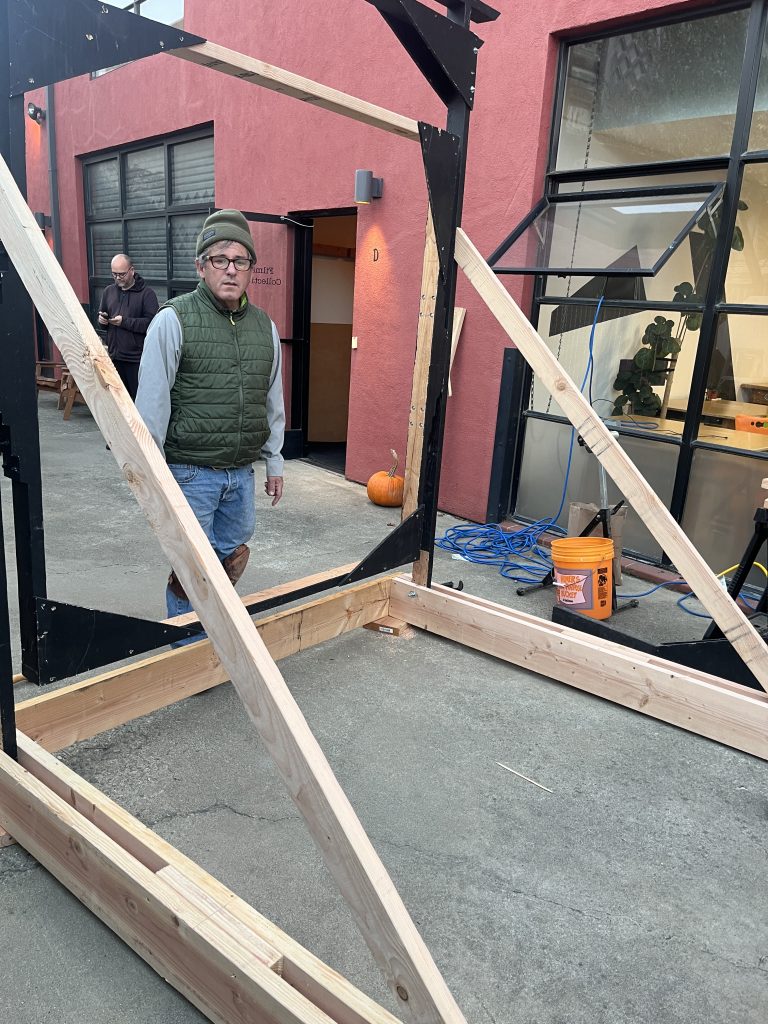
Hey friends. We are fast tracking to January when our award winning PF3000 – Large Format 8-bit Sprite Designer will be on display at the 2026 Napa Lighted Arts festival. While this project has been underway for several months now, we’ve only recently started construction on the updated frame for the PF3000 display. What better time than now to talk about the changes we’re making to the frame and why.
Other Articles in this Series:
- PF3000 v2’s Touch Sensors: Making Art for Napa Lighted Arts Part 2
- 3D Printing the Lattice: Making Art for Napa Lighted Arts Part 3
- Circuits and Power and Networks, Oh my: Making Art for Napa Lighted Arts Part 4
- Build Day: Making Art for Napa Lighted Arts Part 5
Origins of the PF3000 v1 Frame
Originally we designed the PF3000 frame to integrate with the garden’s that host the Oakland, CA Autumn Lights show which is a 3 day outdoor event that takes place during October. At this particular event, the artists typically spend time near the art pieces during the event. This allows an artist to respond to needs that arise during the show – for example if its going to rain over night we can throw a tarp over the art piece at the end of the show to keep moisture out. Artists can also directly interface with crowds and ensure safe behavior from the crowd among others.
Given the event takes place during the fall here in Bay Area of California, we weren’t particularly concerned with weather events. That didn’t stop us from planning for some possibilities though:
- In the event of high winds we can ‘flip’ the art piece on its hinges to ensure the piece will not catch the wind like a sailboat.
- In a truly severe weather event, we will be there to remove on-lookers from the art piece and we will shut down the art event for safety reasons.
- As mentioned earlier, if things were just a little wet we can just throw a tarp over the art piece (and we did a few times).
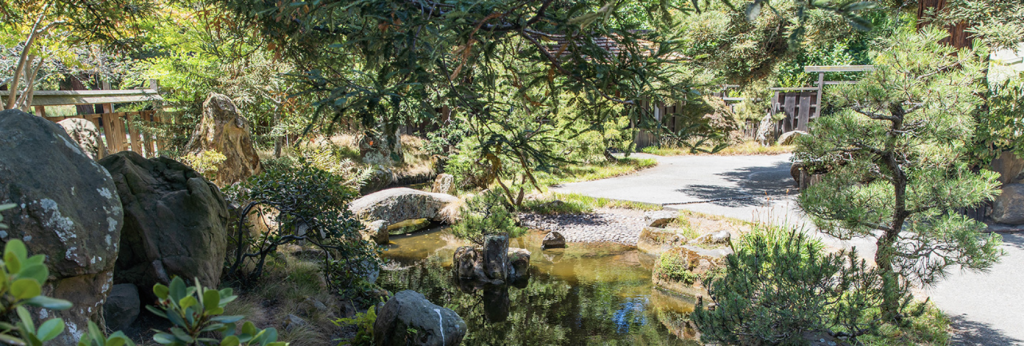
The garden’s of Lake Merritt also provides a particular aesthetic that we wanted to participate in. As you walk around the garden there are various Japanese inspirations in the garden. We wanted our art to blend with those inspirations and designed the aesthetics of the frame to this end. A final note is that because the Autumn Lights festival in Oakland is a botanical installation (meaning its installed in a garden) we can take design piece leveraging garden itself like leveraging various plans to enhance the experience… and manage trip hazards.
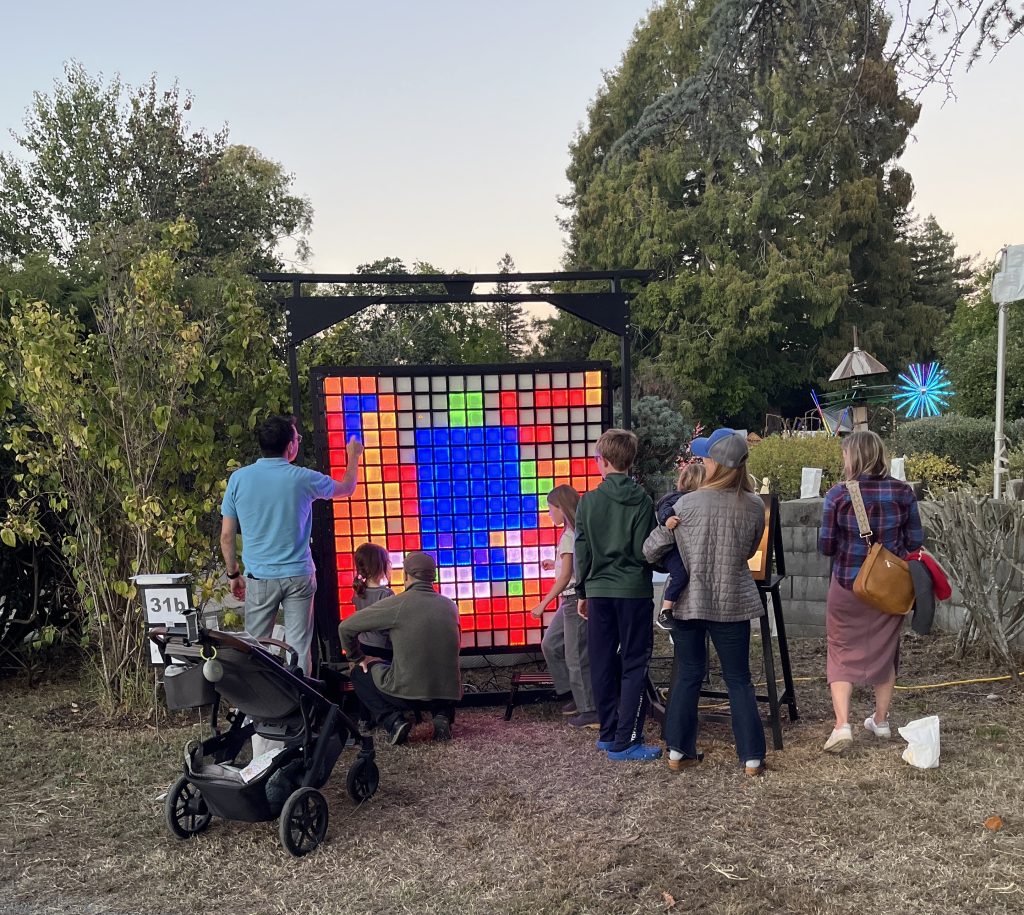
The original (v1) frame for the PF3000 stands on a “T” like structure and the display itself is on a swivel within that frame. There are feet that stick out 4 feet on the front and back of the frame with the display sitting squarely in the middle. The swivel feature we actually use to setup the piece – we install the 4 quadrants of the display in a horizontal position and then rotate the display vertically.
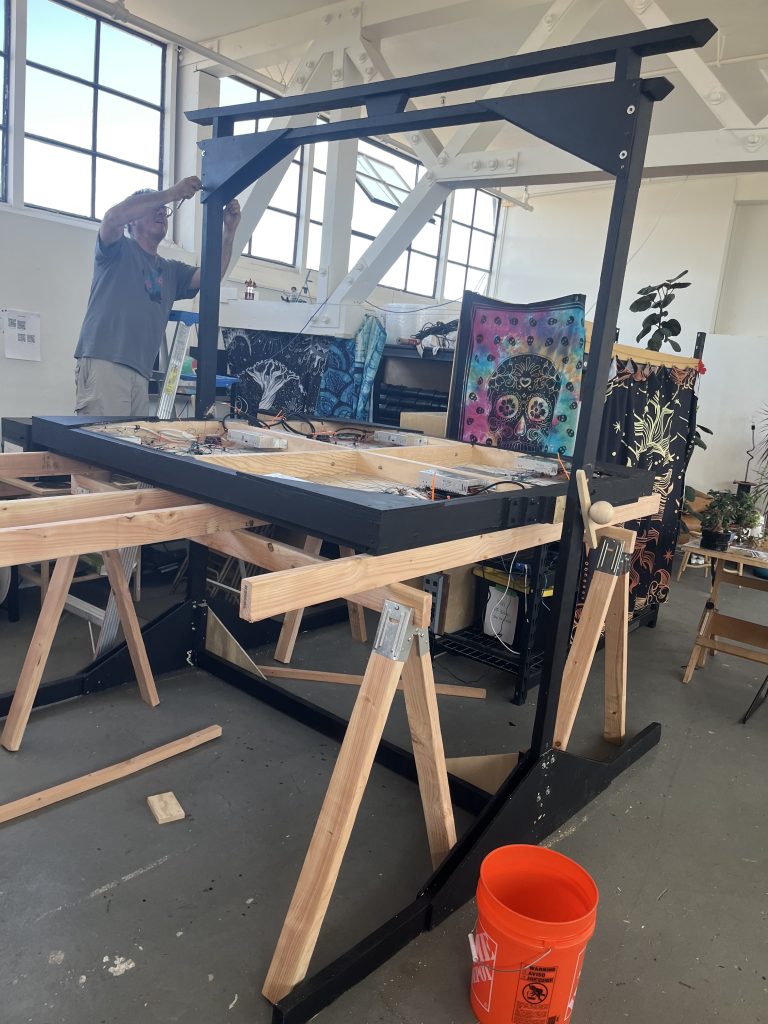
Installation Requirements for Napa Lighted Arts
The Napa Lighted Arts festival is a 30-day long outdoor municipal installation; municipal meaning we install it within a city for the general public to enjoy (around 100,000 people for this event). A municipal installation in the dead of winter comes with challenges we didn’t consider in the original design. When you add in the fact that the installation is 30 days long and 2 hours away from our studio we also have to consider the fact that we simply can’t be there most of the time. The PF3000 not only needs to be ready for the general public it needs to be ready for weather.
Now preparing the art for this new reality is beyond our adjustments to the frame that we’re talking about in this articled but the frame is a significant component in ensuring little things like, you know, public safety. We’ll talk about some of those other changes in another post, for now though, let’s talk a little bit about…
Winter Weather in Napa
A question we had to ask ourselves:
what exactly are we up against?
And the tl;dr answer: wind and rain. While rain certainly impacts the art, this isn’t really something the structure needs to be as concerned with – that’s more of a problem for the electronics (and we will get to that in a future post). Now wind is a whole other thing. No really, wind is some serious business and so storm winds are an environmental factor we absolutely must consider in our structural design.
When Wind Ruins your day – Burning Man Edition
High winds is a pretty serious concern for an art piece that’s heavy. When the winds become somewhat severe, a well meaning art piece can turn into serious injury or even death. No really, I’ve seen it happen; as a former participant of Burning Man I can tell you just what the combination of high winds and well meaning art can do to someone. One year I saw a geodesic dome fly into the air and hit a poor woman in the head and she had to go straight to the hospital; thankfully she survived that encounter but it could have been much worse. That’s not even the only time I’ve seen poor planning go awry in a high winds situation at Burning Man; that wind is no joke, f’real.
Now the PF3000 is a few hundred pounds and has a large 6’x6′ surface – a surface that would make a great sail for your boat. Just imagine if this thing was flying at you during a storm… yea, not good. Wind is something we need to prepare for to ensure public safety and we take our responsibility seriousIy. The PF3000 is a an art piece that brings endless joy, we’re going to make damn sure everyone has a great time.
Winter Wind in Napa
In order to engineer for the appropriate circumstances we have to go back to our earlier question: What are we up against? Thanks to the magic of data collection and the internet we can pretty easily get to this information. Here’s wind every day in February 2024 and 2025 respectively:
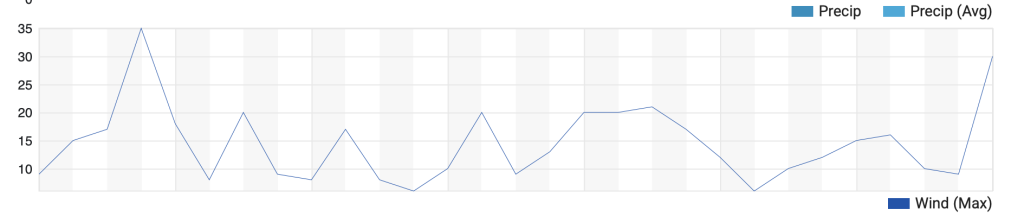
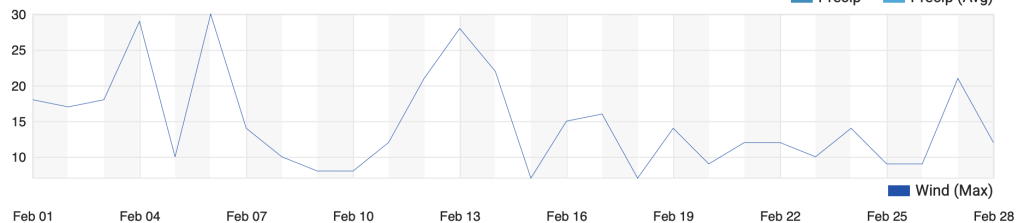
We can see in these charts there’s some normal wind behavior in february – a few days where the wind gets to between 30-35 mph. Of course we can’t just look at February, we have to look at January, and its poor form to take a small data sample of just two years – so we looked at around the last 10 years when analyzing the data. We found in pretty rare cases the wind could get up to 40 to 50 mph but never anything much above that.
Our task then is to engineer for more than 55mph. You never want to engineer for the recorded metric – that’s a good way to be surprised in a bad way. Rather, we need to engineer well beyond the recorded maximum to ensure our art brings only joy.
Public Safety
A municipal art installation is open to the public. In fact, it is exposed to the public 24/7. Any kind of person at any time can interface with the art. And being super realistic here, you don’t always know exactly what a person would notice or not notice. We need to make sure that the art is as safe as possible for any kind of person, regardless of how aware they are of their surroundings.
From the perspective of the frame our v1 design has one significant problem: its got feet that stick out of the front. When you show this to a city planner the first thing they’ll say is, Hey, that’s a trip hazard. Yea, and that’s what they said. In addition to all that wind stuff I was talking about a second ago, we also have to make sure we don’t have any trip hazards.
Now the PF3000’s feet were designed the way their were for a reason – I already mentioned that the PF3000 is heavy and the last thing you want is for it to simply fall on top of you (like, talk about suck). The front feet of the PF3000 stick out four feet on either side and they ensure that the art piece won’t fall in either direction. We can’t simply remove the front feet without creating a new problem.
And this is our challenge – how do we ensure the PF3000 doesn’t fall over fatally crushing nice people while also ensuring there are no trip hazards?
Structural Engineering: The Back-weighted Frame
Let’s sum up what we know we’ve got to manage for a 30 day winter installation in Napa, CA:
- Wind Gusts could get pretty high in the winter
- The art cannot fall on anyone, cause that would be bad
- No trip hazards
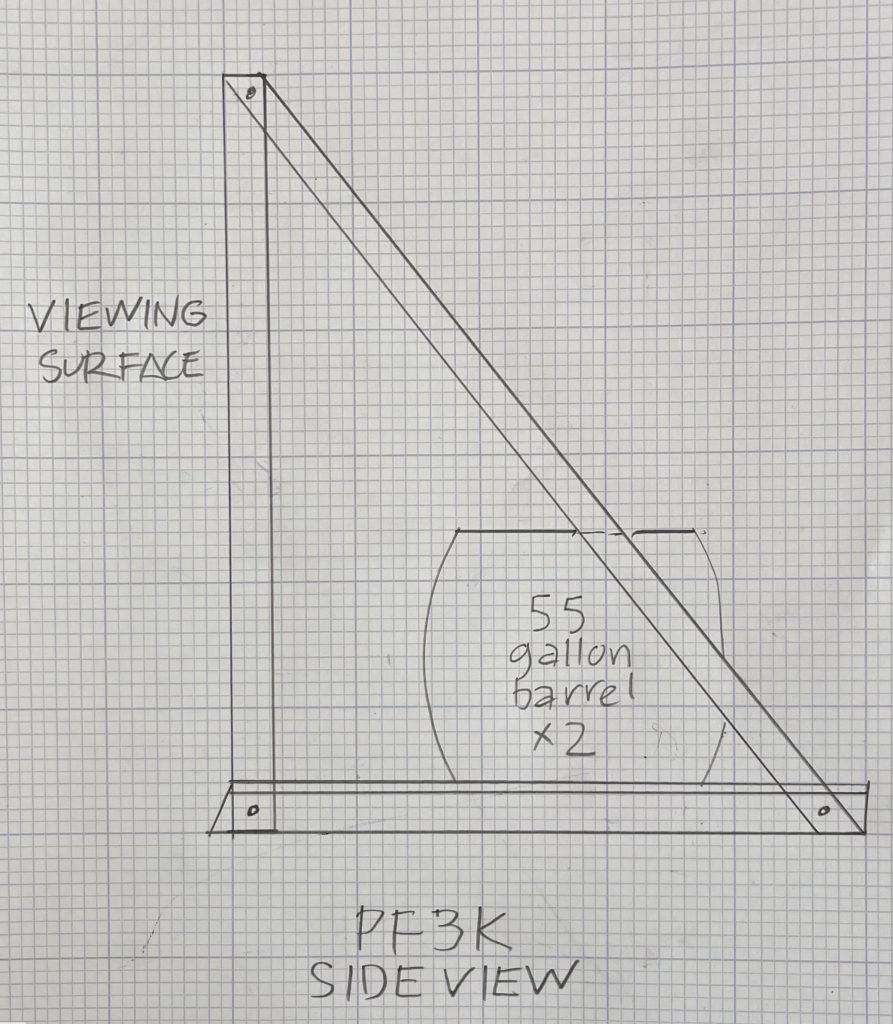
We can solve the bulk of these issues with what’s called a back-weighted frame. That is the frame, instead of extending forward, can extend further behind the art piece. If the rear of the art piece weighs enough, it will not fall forward. Since wind gusts can be significant, we can make the rear of the art piece really heavy. Then, with some additional reinforcement, we can also mitigate any other damage high winds could do.
We’re fancy so we did our design on graph paper, just like your mom used to do:
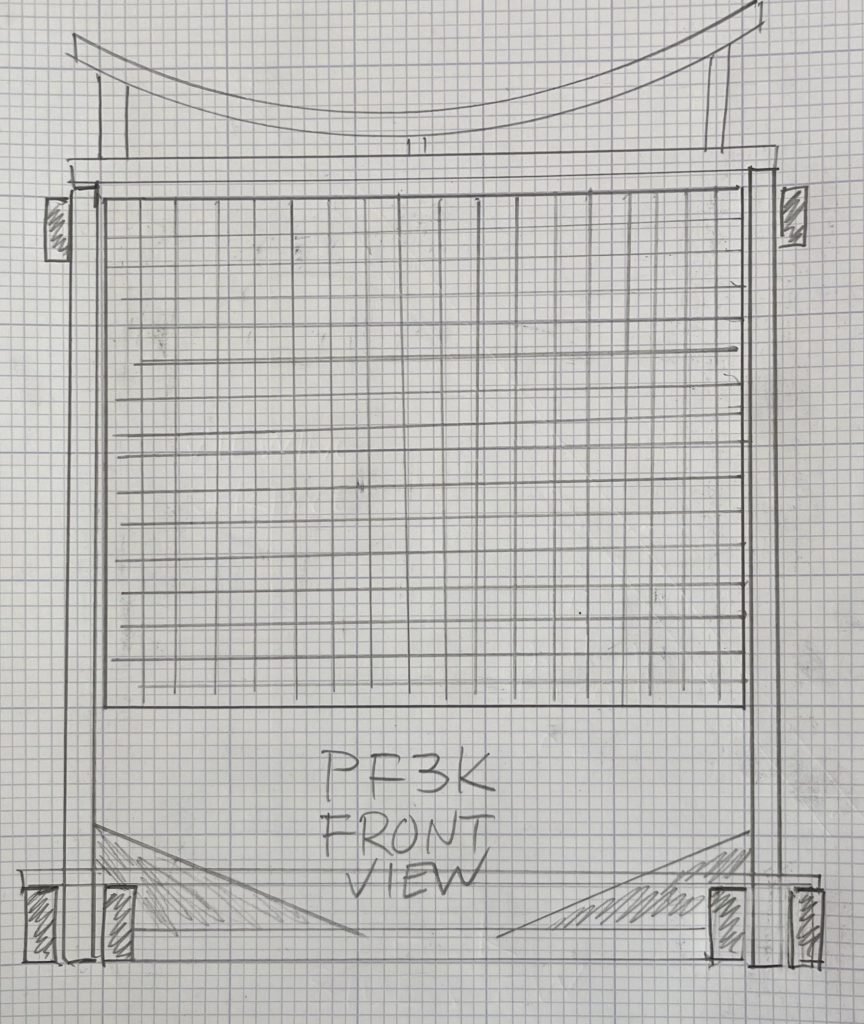
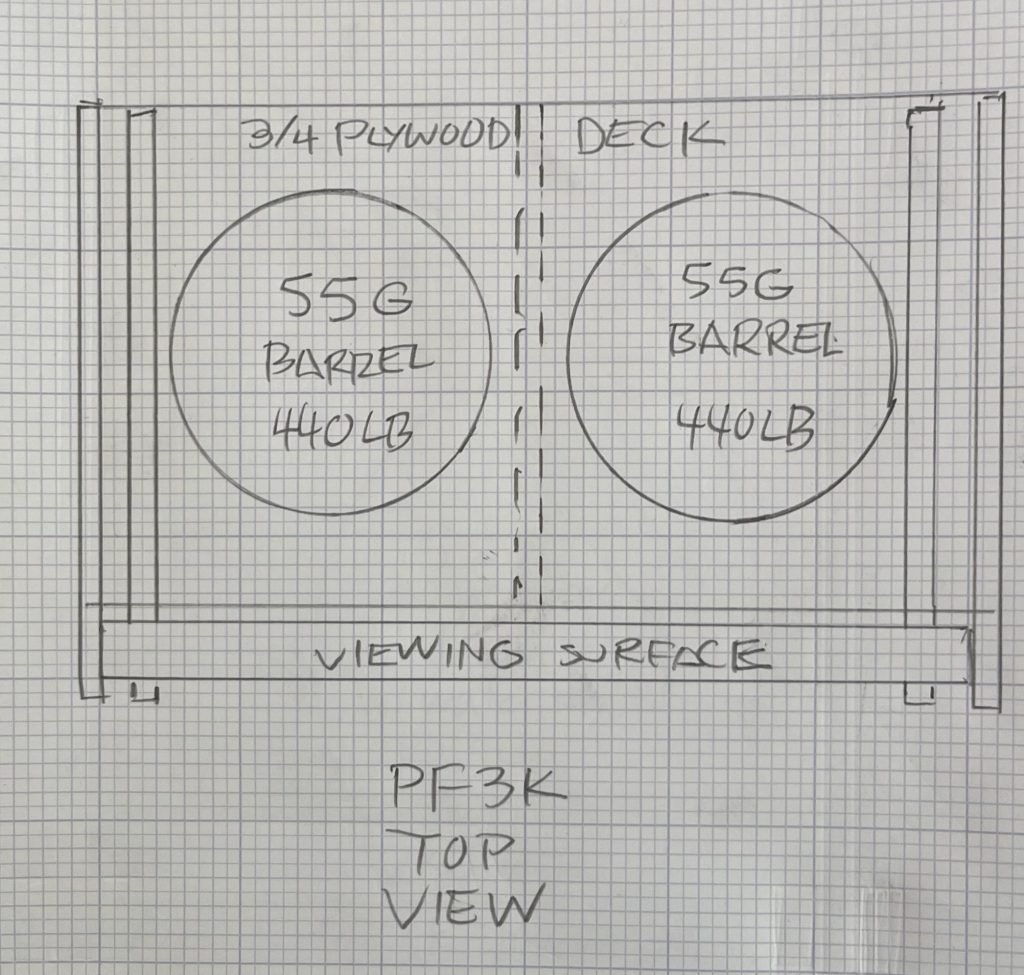
Behind the PF3000 we essentially construct a rear deck (like the one at your grandma’s house) that’s reinforced by angled beams. Then we weigh it down using two 55 gallon barrels full of water; this is about 1000 lbs of weight. The reinforced beams keep the art piece from twisting and snapping the legs and the weight will keep the art piece grounded in fairly high winds.
With these modifications it would take a fairly severe tornado for anything really bad to happen. Thankfully we don’t really deal with those in California (and let’s hope that doesn’t change!).
Public Safety in a Storm? We got you boo
With our new v2 frame the PF3000 will not go anywhere in high winds all the while not having any trip hazards wreaking havoc on the local population. Now this doesn’t solve all of the challenges that come with an outdoor municipal installation in the dead of winter but it does ensure public safety. We’ve actually done a ton more work to manage what happens when it rains that we haven’t even gone into here… but we will.
Stay tuned and thanks for going on this journey with us.